Category: blog

  • Not Every Website Should Be Judged by Conversion Rate

    Not Every Website Should Be Judged by Conversion Rate

    Conversion rate matters.

    For many businesses, especially SMEs, a website is expected to support sales, generate enquiries, or help customers move closer to making a purchase.

    That is perfectly reasonable.

    An e-commerce website should help people buy. An online catalogue should help customers explore products. An online showroom should help potential buyers understand what a company offers.

    In these situations, conversion is naturally an important measurement.

    But I think we have become so used to talking about website conversion that we sometimes overlook a more basic question:

    Is conversion the only job a business website should perform?

    I do not think so.

    A website can generate enquiries, but it can also shape how people perceive a company.

    It can help customers understand the business.

    It can support a sales team.

    It can strengthen corporate credibility.

    It can reduce uncertainty.

    And sometimes, before a customer is ready to contact you, the most important job of your website is simply to make your company look credible enough to remain under consideration.

    Conversion is one outcome.

    Trust, clarity and credibility are often what make that outcome possible.

    Why Businesses Became So Focused on Website Conversion

    There is a good reason businesses pay attention to conversion.

    A website requires investment.

    Management naturally wants to know whether that investment produces results.

    How many visitors became enquiries?

    How many people clicked WhatsApp?

    How many submitted a form?

    How many purchased?

    These are useful questions.

    The problem starts when we assume that every visitor must immediately take an action for the website to have value.

    Business buying decisions are not always that simple.

    A potential customer may visit your website today and contact you two weeks later.

    A procurement manager may check your company before adding you to a shortlist.

    A business owner may look at your website, send it to a partner and discuss your company internally.

    A candidate may visit before deciding whether to apply for a position.

    A potential distributor, investor or business partner may visit simply to understand whether the company appears established and credible.

    None of these actions necessarily produces an immediate form submission.

    But they still matter.

    This is why I believe businesses should be careful about reducing website performance to a single metric.

    A Website Can Serve More Than One Business Purpose

    Before designing or redesigning a website, companies should first decide what the website is supposed to achieve.

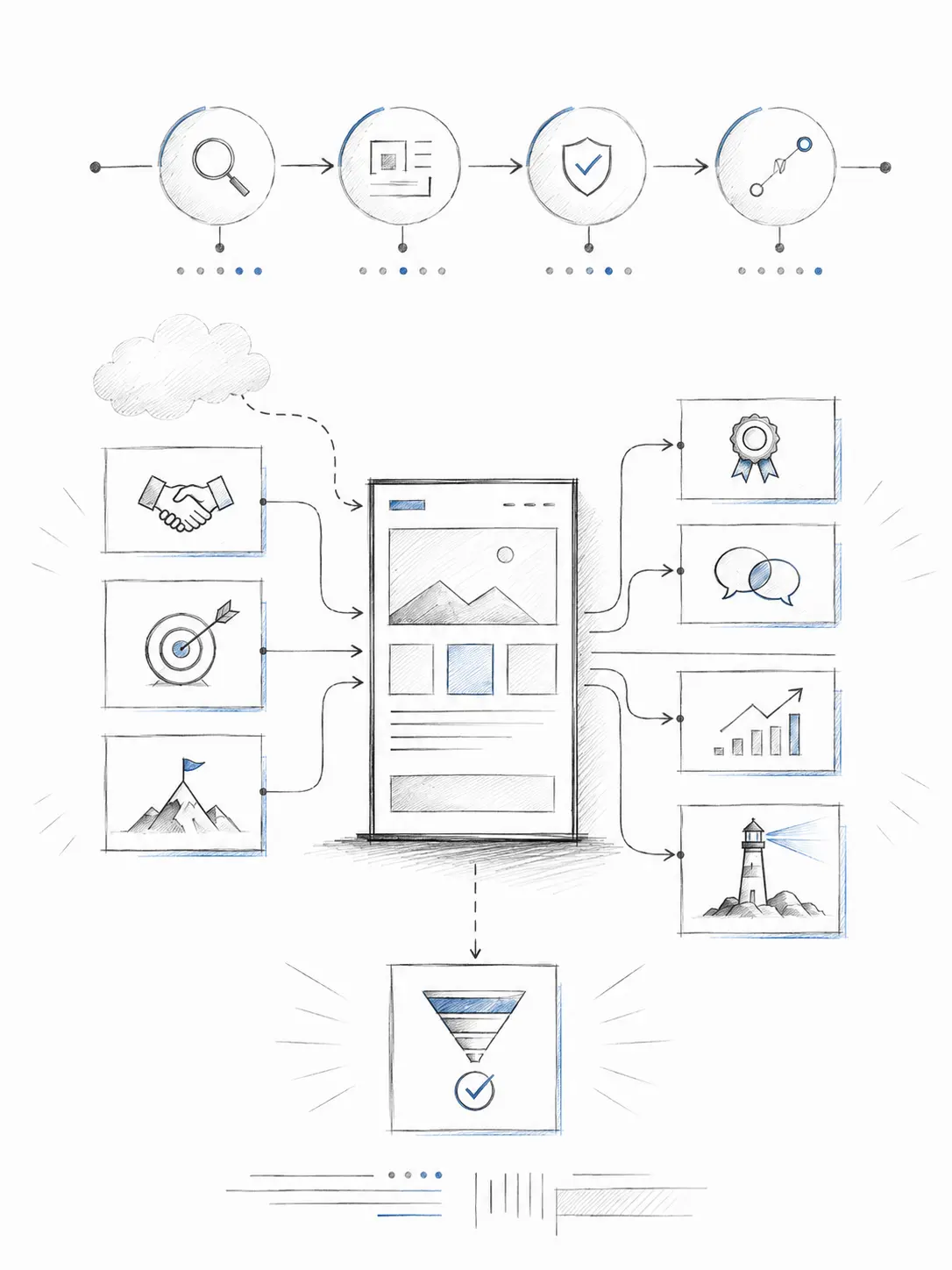
    Depending on the business, a website may support several purposes.

    It may help with:

    • Lead generation
    • Sales support
    • Product or service education
    • Corporate branding
    • Customer confidence
    • Recruitment
    • Partner confidence
    • Market positioning
    • Customer service
    • Long-term digital visibility

    The important point is not that every website must perform all these functions.

    It is that every website should have a clearly understood purpose.

    A website built mainly for enquiry generation should be designed differently from a corporate website built mainly to strengthen credibility.

    A product catalogue should be structured differently from an investor-facing corporate website.

    A professional services firm may depend far more heavily on expertise, credibility and trust than on aggressive calls to action.

    There is no single correct formula for every business website.

    The correct design depends on the decision the website needs to help people make.

    The Overlooked Role of Brand, Credibility and Trust

    One of the most overlooked purposes of a business website is trust.

    Many companies think of branding mainly in visual terms.

    Logo.

    Colours.

    Photography.

    Fonts.

    These things matter, but corporate credibility goes deeper than appearance.

    When someone visits a company website, they are constantly forming judgments.

    Does this company look established?

    Do they appear to understand what they are doing?

    Is the information clear?

    Does the business appear active?

    Can I find evidence of its experience?

    Do its services make sense?

    Does the website feel maintained?

    Would I feel comfortable contacting this company?

    These questions may never be consciously expressed by the visitor.

    But they influence behaviour.

    A website is often one of the first places where customers verify whether the impression they have of a company matches reality.

    That is why professional image is not simply decoration.

    It contributes to confidence.

    And confidence affects whether people continue the conversation.

    “We Only Need a Simple Website”

    Over the years, I have often heard clients say:

    “We only need a simple website. We don’t need anything complicated.”

    There is nothing wrong with wanting a simple website.

    In fact, I generally agree.

    A good website should feel simple.

    The misunderstanding begins when people assume:

    Simple = Cheap

    and

    Complex = Expensive

    These are not the same thing.

    In website design, simplicity is not necessarily about how little work is involved.

    It is about how little effort the user needs to make.

    A website can have only five pages and still be confusing.

    Another website may contain hundreds of pages but still feel easy to navigate because its structure has been carefully planned.

    The number of pages does not determine simplicity.

    The number of features does not determine simplicity.

    The real question is:

    How easily can the user achieve what they came to do?

    Simple Does Not Mean Cheap

    I like to explain it this way:

    Simple is a design outcome.
    Cheap is a pricing decision.

    They are two different things.

    Consider the iPhone.

    One of the reasons many people find it easy to use is that the interface removes unnecessary decisions.

    You do not need dozens of visible buttons to perform basic tasks.

    The experience feels simple.

    But nobody assumes that because the product is easy to use, it should therefore be the cheapest phone in the market.

    In fact, achieving simplicity often requires more thought.

    The same applies to websites.

    Before a website can feel simple, someone has to decide:

    What information matters most?

    What should appear first?

    What should be removed?

    How should the navigation work?

    What questions will customers have?

    Where should users go next?

    What should appear on mobile?

    How do we make a large amount of information understandable without overwhelming the visitor?

    Adding things is relatively easy.

    Removing unnecessary complexity is harder.

    Complexity is easy to add. Clarity takes work.

    What Simplicity Really Means in Website Design

    To me, a simple website is not necessarily a small website.

    It is a website that is easy to understand and easy to use.

    A visitor should be able to understand, reasonably quickly:

    Who is this company?

    What does it do?

    Who does it serve?

    Why should I pay attention?

    Where can I find more information?

    What should I do next?

    Good UX and UI are not about making websites look fashionable.

    Their purpose is to reduce friction.

    A visitor should not have to hunt for basic information.

    They should not have to guess what a button means.

    They should not need to open five different pages before understanding what the company actually provides.

    The job of design is not to make the visitor admire the interface.

    The job of design is to help the visitor move through information with as little unnecessary effort as possible.

    That is what I mean by simplicity.

    Complexity Is Not the Same as Value

    There is another misconception I often see.

    Some businesses assume that a website becomes more valuable when it has more features.

    More animation.

    More pages.

    More functions.

    More visual effects.

    More technology.

    Sometimes those things are useful.

    Sometimes they are unnecessary.

    A complex feature is valuable only when it solves a real business or user problem.

    If it does not, it is simply additional complexity.

    The same principle applies in the opposite direction.

    A website that looks visually minimal may require substantial work behind the scenes.

    There may be strategy.

    Content planning.

    User research.

    Information architecture.

    Responsive design.

    Accessibility considerations.

    Search optimisation.

    Performance work.

    Security.

    Content management planning.

    Testing.

    A visitor may never see the complexity behind the website.

    That is often a sign that the work has been done properly.

    Good design hides unnecessary complexity from the user.

    A Website Should Help People Make Decisions

    This is how I increasingly think about business websites.

    A website is not simply a place to store company information.

    It is a place where people form decisions about the company.

    The visitor may be deciding:

    Should I trust this business?

    Should I contact them?

    Should I include them in the shortlist?

    Should I ask for a quotation?

    Should I recommend them internally?

    Should I work with them?

    Should I apply for a job here?

    Should I continue researching?

    Seen from this perspective, website design becomes less about decoration and more about decision support.

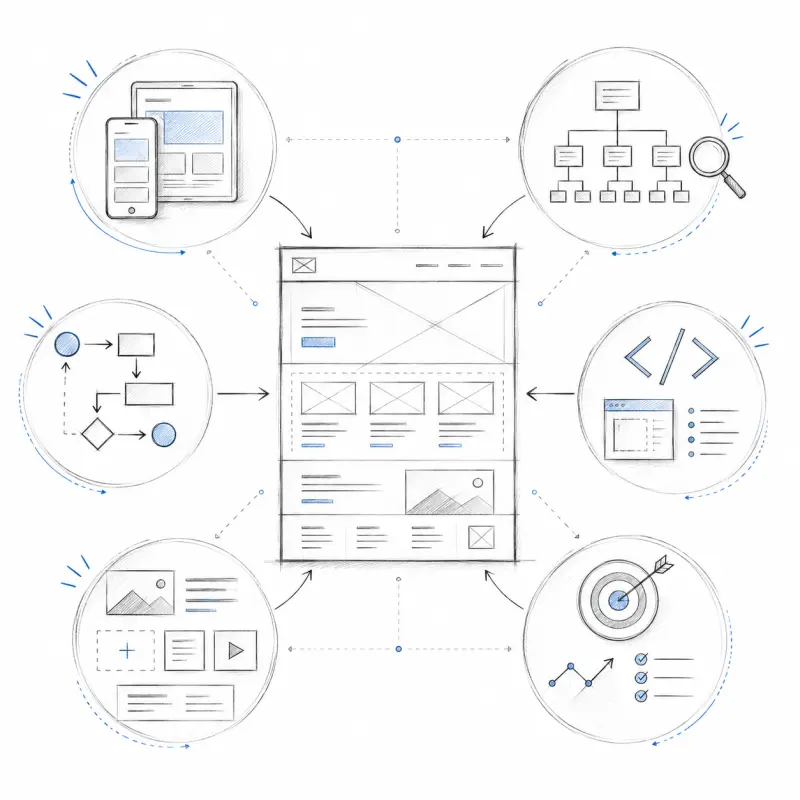
    The website needs to help a person move through a simple journey:

    Find you → Understand you → Trust you → Decide what to do next

    Conversion is part of that journey.

    But conversion usually comes after understanding and trust.

    If the visitor does not understand what you do, the CTA will not solve the problem.

    If the visitor does not trust the company, adding another enquiry button will not solve the problem either.

    So What Should a Business Website Actually Do?

    There is no universal answer.

    For one company, the most important purpose may be generating qualified enquiries.

    For another, it may be presenting technical capabilities clearly.

    For a corporate organisation, credibility may be more important.

    For a professional services firm, demonstrating expertise may matter most.

    For a manufacturer, helping customers understand capabilities, products, certifications and markets may be the priority.

    For an established company, the website may need to support many audiences at the same time.

    That is why I believe one of the most important questions should come before design begins:

    What business decision should this website help someone make?

    Once the purpose is clear, many other decisions become easier.

    What content is needed?

    What pages should exist?

    What should be shown first?

    What proof should be included?

    What should the call to action be?

    What information is unnecessary?

    Design becomes much easier when the purpose is clear.

    Final Thought: Define the Purpose Before Designing the Website

    A website should not exist simply because every company is expected to have one.

    And it should not automatically be judged only by how many people immediately submit an enquiry.

    Conversion matters.

    But so do clarity, credibility, positioning and trust.

    Sometimes the website’s job is to generate an enquiry today.

    Sometimes its job is to help the customer feel confident enough to include your company in tomorrow’s discussion.

    Both have business value.

    So before asking:

    “How much will the website cost?”

    or even:

    “What conversion rate can we achieve?”

    I think there is a more important question to ask first:

    What exactly do we want this website to do for the business?

    Because a good website is not simply a collection of pages.

    It is a business asset designed with a purpose.
  • We’re Just a Small Company, Cybercriminals Aren’t Interested

    We’re Just a Small Company, Cybercriminals Aren’t Interested

    The Most Fatal Security Misconception for SMEs


    With the rapid advancement of Artificial Intelligence (AI), technology is boosting operational efficiency for businesses while quietly triggering a cybersecurity storm. Today’s cybercriminals no longer rely on manual intrusion; instead, they deploy AI-automated tools to scan the web for vulnerabilities 24/7. In the face of these intelligent attacks, traditional static defense mechanisms are facing unprecedented challenges.

    In Malaysia, many small and medium-sized enterprises (SMEs) harbor a common misconception about website security. The most frequent refrains are: “We’re just a small business. Our website doesn’t have high traffic or recognition, and cybercriminals won’t get any money from hacking us anyway.”

    However, this blind neglect of security is often the starting point of catastrophic business losses.

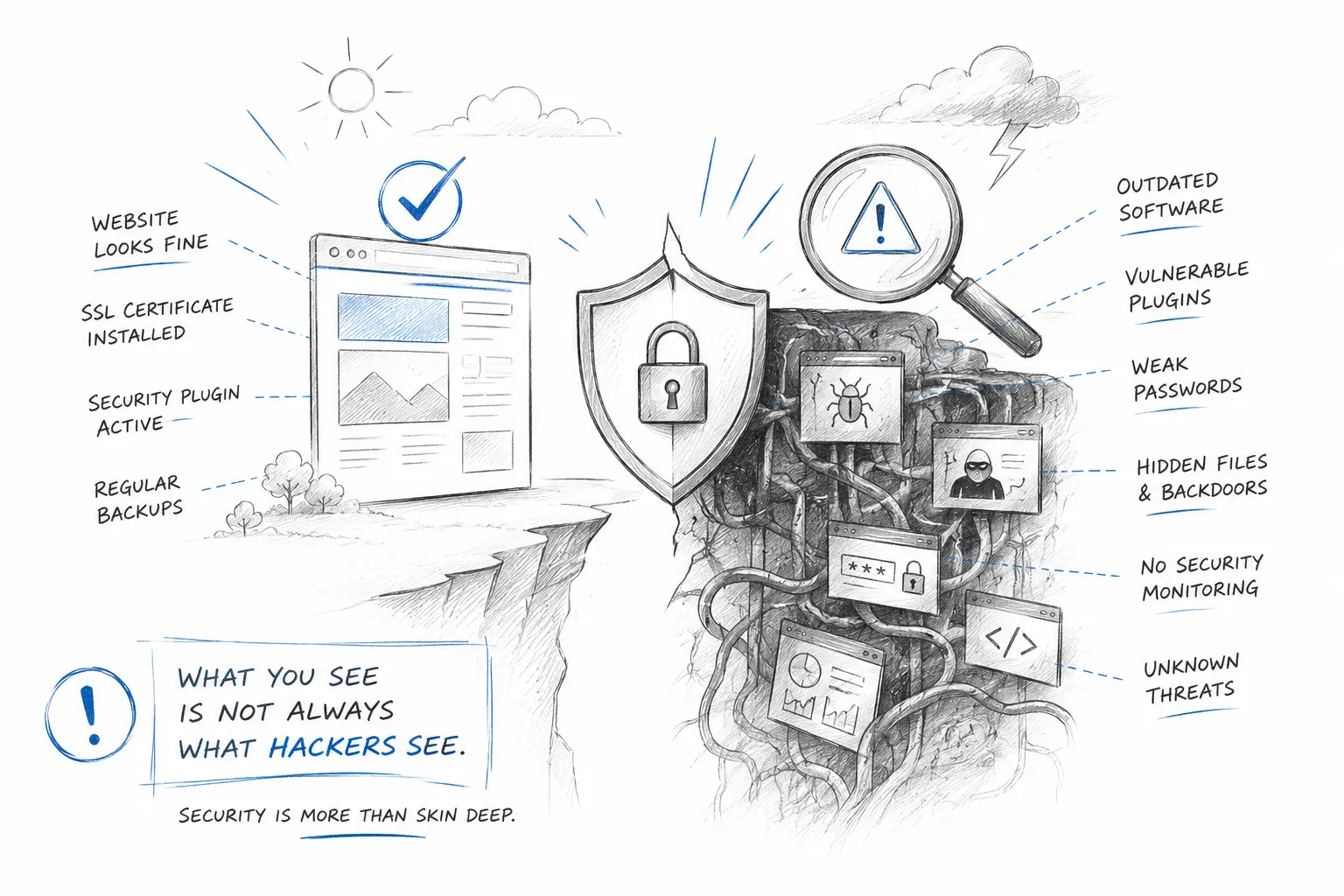
    For a simple corporate website with only 5 to 10 pages, there appears to be no confidential data at first glance. Many business owners even naively assume: “Even if the website gets compromised, can’t we just restore it with a backup?”

    But modern cybercriminals have long since changed the rules of the game. They rarely attempt to steal money directly from SME websites that lack transactional cash flow. Instead, they use these poorly defended sites as “zombie machines” (botnets) and stepping stones. Cybercriminals secretly inject illegal gambling or adult content deep into hidden server directories, or perform SEO Spam injections—quietly exploiting your domain name to generate massive profits for themselves.

    It is only when businesses receive a violation warning from their hosting provider, or even a formal notice from enforcement agencies, that they suddenly realize: their official website has been completely hijacked by cybercriminals and blacklisted by major search engines.

    The price of this “hindsight” is devastatingly high:

    • Domain Ruined: The domain name you worked years to build gets blocked by web browsers and flagged as a “Dangerous Site.”
    • Physical Assets Rendered Useless: QR codes and printed URLs on product packaging, business cards, brochures, and flyers instantly become “dead links.”
    • Digital Assets Wiped Out: Online ad campaigns fail, and your Google search indexing and SEO rankings vanish overnight.
    • Brand Trust Bankrupted: Prospective clients are greeted with alarming security warnings the moment they visit your site, causing corporate reputation to crumble instantly.

    When hearing “website security,” many business owners immediately imagine astronomical professional service fees. In reality, security protection isn’t better just because it’s more expensive; tailored solutions are the truly prudent approach.

    To put it into perspective, SMEs do not need to build expensive “national-level” or “bank-grade” defense lines. Based on my own experience and perspective:

    • 80% of Common Security Threats: Can be easily kept at bay through routine maintenance, system/plugin updates, and vulnerability audits.
    • The Remaining 20% of Unknown Risks: Can be effectively safeguarded in real time with a reasonable Web Application Firewall (WAF).

    Cybersecurity is not an exclusive privilege reserved for enterprise giants—it is the baseline for every digitalized business. Don’t let a single oversight destroy the brand reputation you have spent years building.

    Learn More: How can SMEs build an 80/20 website protection shield at low cost?

  • Is the AI One-Person Business Really Reliable? What Businesses Should Consider Before Choosing a Vendor

    Is the AI One-Person Business Really Reliable? What Businesses Should Consider Before Choosing a Vendor

    Recently, many YouTubers, bloggers, and professionals who study AI have been talking about one major trend: AI can greatly amplify an individual’s ability.

    With the right AI tools, one person can now handle work that previously required multiple roles, departments, or specialists. Copywriting, image generation, research, automation, content production, data analysis — many tasks can now be supported or accelerated by AI.

    Because of this, we are starting to hear more about the rise of the “one-person company” or “One-Person Business” The idea is that one person, powered by AI, can manage many functions that used to require a traditional team.

    It sounds attractive. But from a business perspective, we should not only look at efficiency. We also need to look at the risks behind it.

    AI Can Definitely Amplify Individual Capability

    I do not deny the value of AI.

    AI can help one person work faster, improve productivity, close certain knowledge gaps, speed up content creation, organize information, and execute tasks more efficiently. For freelancers, consultants, small teams, and entrepreneurs, AI is a very powerful tool.

    In the past, a freelancer might only be able to handle a limited amount of work. Today, with AI, that same person can write faster, produce more, respond quicker, and even appear to operate like a small team.

    In that sense, AI has turned many freelancers into “super freelancers.”

    But increased capability does not mean business risk disappears.

    The Biggest Issue With a One-Person Company Is Not Ability. It Is Dependency.

    The real concern with an AI-powered one-person company is not whether the person knows how to use AI.

    The real concern is whether the entire service delivery depends too heavily on one individual.

    If all communication, decision-making, execution, client relationships, technical knowledge, and project memory are concentrated in one person, then that person becomes the central point of the entire service.

    Once this central person is unable to operate — due to illness, burnout, personal issues, being overloaded, losing focus, or even more serious unexpected situations — the client will face a very real problem:

    Who will take over?

    Is there another person who understands the project?

    Is there proper documentation?

    Is there a process?

    Is there backup support?

    Is there a company structure that can continue supporting the client?

    This is the real risk businesses need to consider when choosing a vendor.

    For Business Clients, Service Stability Matters More Than “One Very Capable Person”

    Many businesses are easily impressed when choosing a website developer, system developer, SEO consultant, AI automation provider, or digital solution vendor.

    This person understands AI. This person speaks well. This person replies quickly. This person seems able to do everything.

    But what a business truly needs is not only “one very capable person.”

    A business needs a service provider that is stable, sustainable, accountable, traceable, and able to support the project over time.

    This is especially important when the project involves websites, business systems, email, servers, customer data, SEO, online advertising, payment processes, or internal operational workflows.

    A vendor is not just someone who completes a task once. Long-term maintenance, troubleshooting, security updates, staff handover, system continuity, and ongoing support are all important.

    If the vendor is only one person, with no team, no process, no documentation, and no backup support, the client is taking on a certain level of business risk.

    An AI One-Person Company Is Not Always a Bad Choice. It Depends on the Type of Project.

    Of course, this does not mean one-person companies or freelancers are always a bad choice.

    Some projects are very suitable for freelancers or small teams. For example, short-term content creation, design concepts, simple landing pages, copy editing, one-off consulting advice, or lightweight automation testing.

    These projects are usually lower risk, shorter in duration, and less dependent on long-term continuity.

    However, if the project is closely related to long-term business operations, such as a corporate website, customer portal, member system, ERP integration, server maintenance, SEO strategy, business email, cybersecurity, or internal workflow system, then businesses should not only ask whether the vendor knows how to use AI.

    They should also ask:

    1. Is the project scope clearly defined?
    2. Is there technical documentation or handover material?
    3. Is there a long-term maintenance arrangement?
    4. Is there a team or backup person supporting the project?
    5. If the main person is unavailable, who can continue the work?
    6. Does the service depend on personal memory, or is there a structured process?
    7. If something goes wrong, who is responsible?

    These questions are often more important than asking, “What AI tools do you use?”

    Do Not Be Misled by the Packaging of the “AI One-Person Company”

    The concept of a “one-person company” can be useful as a metaphor. It means that one person, with the help of AI and digital tools, can now achieve what previously required a small team.

    The problem is that many platforms and content creators keep emphasizing the idea that “one person can do everything.” This may create the wrong impression that teams, processes, experience, accountability, and long-term support are no longer important.

    That is a dangerous misunderstanding.

    AI can improve productivity, but AI does not automatically carry business responsibility. AI can help one person do more, but AI does not automatically create a service system. AI can make an individual more capable, but AI cannot replace a business’s need for stability, trust, and risk management.

    Conclusion: When Choosing a Vendor, Do Not Only Ask Whether They Use AI

    In the future, there will be more AI-powered freelancers, small teams, and one-person companies.

    This is not a bad thing.

    The real issue is that businesses should not be attracted only by messages such as “AI is powerful,” “delivery is faster,” or “one person can handle many things.”

    The more important questions are:

    Is this vendor reliable? Can the project be handed over if needed? Is the service sustainable? Will someone be responsible if something goes wrong? Is there long-term support? Is this just an individual who knows how to use AI, or is this a solution partner with a proper service mechanism?

    AI will change how work is done.

    But the core standard for choosing a business vendor remains the same:

    Trust, accountability, stability, experience, process, and long-term support.

    These are the things businesses should truly pay attention to.

  • Do You Really Need AI?

    Do You Really Need AI?

    Using AI as a selling point has become a badge of honour for businesses across every industry. Slap “AI” onto anything and suddenly it sounds more compelling which, from a sales and marketing perspective, actually works.

    AI CCTV. AI tyre workshops. AI health screenings. The list goes on. You name it, AI has touched it. Sound familiar? This is exactly what happened when the internet first emerged every business scrambled to be “online,” whether it made sense or not.

    Most small businesses use generative AI tools to write emails, craft copy, and generate images essentially glorified admin assistance. Companies with a bit more IT awareness deploy AI chatbots as customer service agents. Those with larger budgets build their own private AI agents.

    But does every product, service, or system actually need AI built into it?


    Here’s a real case. A wholesale client of mine was receiving hundreds of WhatsApp messages every day all asking the same thing: “What’s the current price for this product?” His instinct was to solve this with an AI customer service chatbot that could automatically handle pricing enquiries, reducing his dependency on headcount. Staff training, human pricing errors, sick leave all of these are real costs.

    After a deep-dive conversation with him, I analysed the situation and advised him that AI was not the right tool for this particular problem. Here’s why:


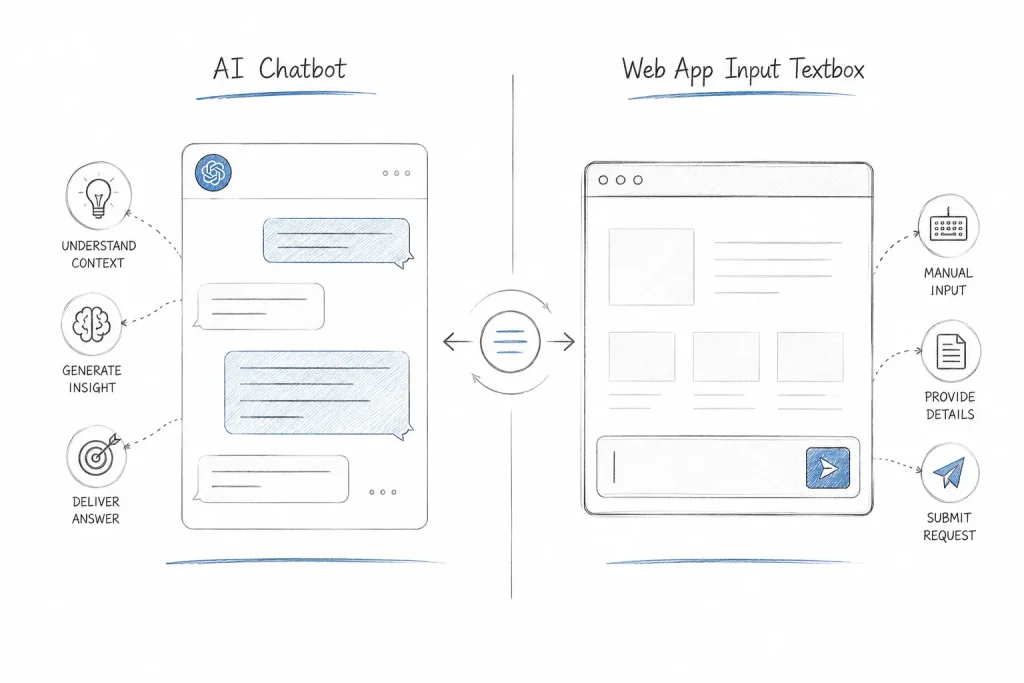
    1. A simple web app would solve this faster and more accurately.

    A product price lookup page where a customer enters a product name or code and instantly gets the price would do the job completely. No back-and-forth. No conversation. Just an answer.

    Compare that to how an AI chatbot interaction actually plays out:

    AI Chatbot: Hi, how can I help you?
    Customer: Hi, I'd like to check a product price.
    AI Chatbot: Could you describe the product in more detail?
    Customer: It's for my machine...
    AI Chatbot: What type of machine is it?

    The problem is clear: AI chatbots are designed to be conversational and human-like which means they can’t give you a direct answer without first gathering context. A web app with a single input field and a simple instruction “Enter product name or product code” is faster, cleaner, and far less frustrating for the user.


    2. AI chatbots require ongoing training and quality control.

    Deploying a chatbot isn’t a one-time setup. It requires continuous data input, output monitoring, and quality refinement not unlike onboarding a new employee, except you’re doing it indefinitely. Yes, AI makes fewer errors than humans. But the maintenance overhead is real.

    A web app, on the other hand, simply pulls from a product database using pattern matching. Accurate. Predictable. Done.


    3. AI chatbots come with hidden costs.

    Not intentionally hidden but genuinely difficult to estimate. AI output is billed by tokens, and you cannot control how many questions a user asks, how they phrase them, or how long each conversation runs. Every user has their own way of expressing themselves.

    A web app, by contrast, constrains the interaction by design. Fixed input. Fixed output. Fixed cost.


    The point isn’t that AI is flawed. The point is that when we architect AI solutions, the intended use case must be crystal clear. AI should not be adopted as a trend. It should be deployed as a tool specifically for tasks that are repetitive, logic-driven, and genuinely beyond what simpler systems can handle.

    The real question to ask before any AI investment isn’t “Can we use AI for this?”

    It’s “Should we?”


    If you’re evaluating whether AI is the right fit for your business operations, the answer usually starts with understanding your workflow first not your technology options. Get in touch with Entertop to discuss.

  • WordPress look like an app store

    WordPress look like an app store

    Your WordPress admin panel looks like an app store. Most SME owners treat it like one. That’s the problem.

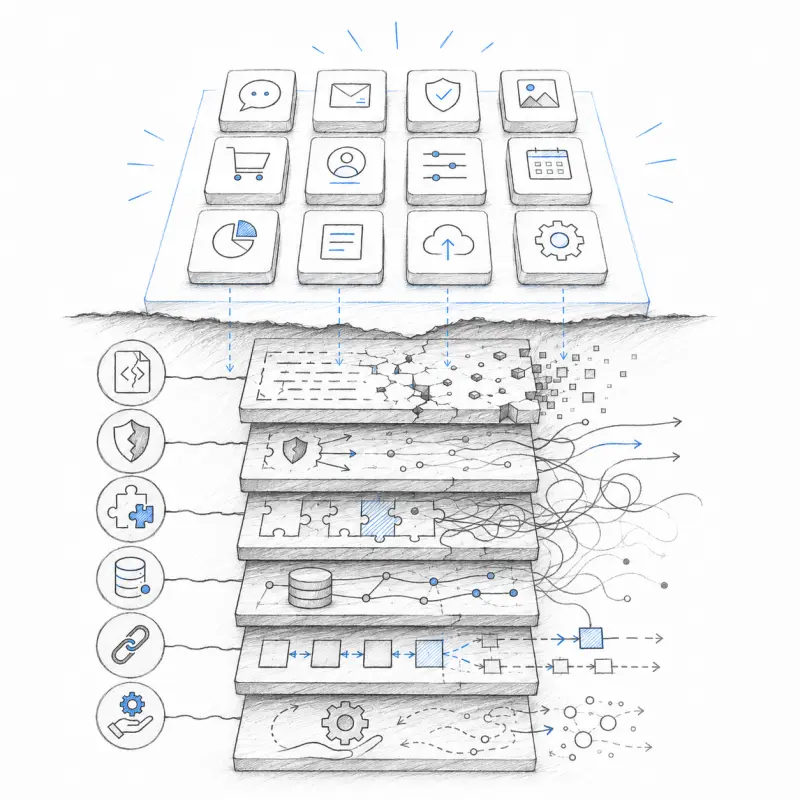
    Thousands of plugins. Good ratings. Simple descriptions. Click install. Done.

    Except each plugin is maintained by a different person or company. Some are actively supported. Some haven’t been updated in years. Some have been abandoned. And some have never been audited for security.

    When you install a plugin without review, you are allowing untested code to run directly on your website, access your database, and sit inches away from your customer information.

    Here’s what a professional review checks:

    – Is this plugin still actively maintained?
    – Does it work with your current WordPress version?
    – What happens to your site when WordPress updates?
    – Is there a documented security history?
    – Does it conflict with your other plugins?

    Most SME owners skip this. Then they wonder why their website broke after a WordPress update, or why they suddenly had a security problem.

    The difference between a website that is a reliable business asset and a website that is a recurring problem often comes down to this: who is accountable for the infrastructure decisions?

    If the answer is “you are guessing,” you need to change that.

  • The SEO Report I Should Have Written Differently

    The SEO Report I Should Have Written Differently

    Not long ago, a client signed up for our SEO package. The goal was straightforward: get their services found on search engines.

    They were highly focused on measurable outcomes. Before we even started, they asked for a forecast SEO report — a projection of what results to expect after the SEO work was done. How much would impressions grow? What about clicks? How many keywords would rank high? This is standard practice in traditional SEO: let the numbers do the talking, and watch the rankings climb.

    Then Google changed the rules.

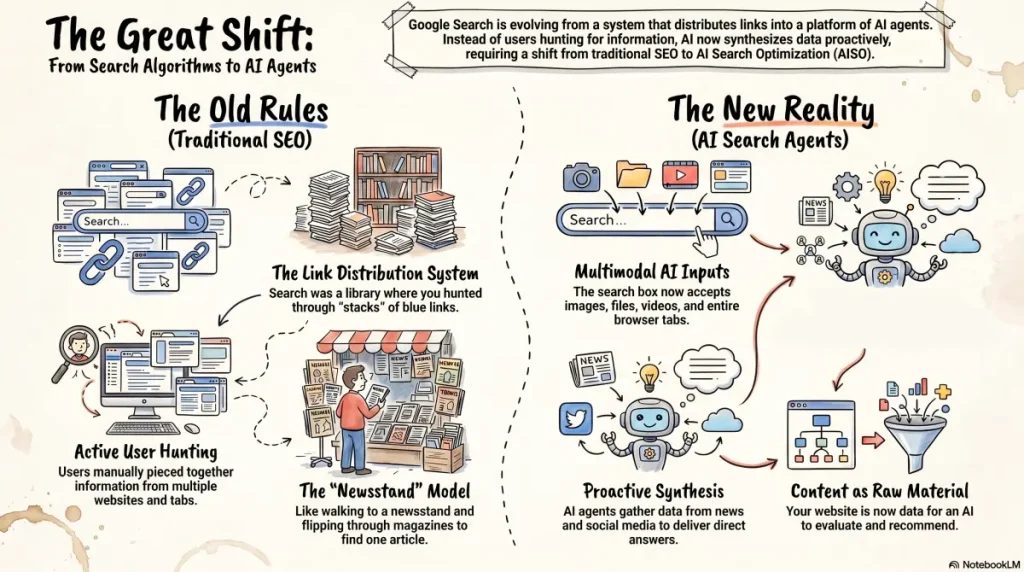
    At I/O 2026 in May, Google made it official — something that had been quietly brewing for over a year: search is no longer primarily a link distribution system. It is becoming an AI agent platform.

    This wasn’t Google adding an AI summary box to the top of search results. This was Google rebuilding Search itself — from a results page into an integrated interface for AI-powered answers, AI agents, and personalised task execution.

    Even the search box has been redesigned. It no longer just accepts keywords. It now supports text, images, files, videos, and even Chrome tabs — a fully multimodal AI-powered input. Users no longer need to search step by step and piece together information on their own. The AI Search Agent proactively synthesises content from blogs, news, social media, and real-time financial and shopping data — and delivers it directly to you.

    Think of it this way: you used to walk to the newsstand, flip through a stack of magazines, and hunt for the article you needed. Now the paperboy drops the exact edition you want at your front door every morning.

    Users have shifted from actively searching to passively receiving.

    So what does this mean for the majority of businesses that rely on SEO to generate enquiries?

    Your website content is no longer just the medium through which users find you. It is now the raw material that an AI agent evaluates when deciding whether to recommend you.


    Does SEO still matter?

    Yes. But the goal has changed.

    You are no longer optimising purely for Google’s algorithm. You are optimising for the judgement of an AI Agent — how it reads, interprets, and decides whether your content is worth surfacing.

    This is why SEO combined with AI Search Optimization is not an optional upgrade for your online marketing strategy. It is the next mandatory foundation.

    As for that client who asked for a forecast SEO report — I should have handed it to them with a note on the first page:

    “The projections in this report reflect performance under the old rules. The game has changed. Let’s redefine what success looks like — together.”

  • What you see on your website may not be what Google sees.

    What you see on your website may not be what Google sees.


    Many companies check their website with the human eye.

    The homepage loads.
    The design looks fine.
    The content appears normal.
    Everything seems to be working.

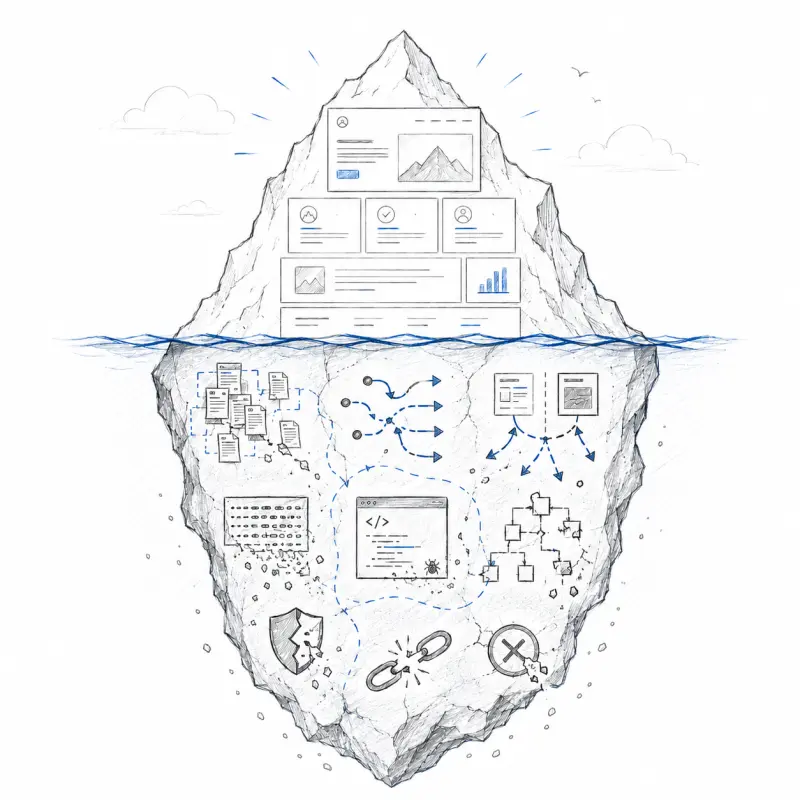
    But from the perspective of a search engine bot, the website may be telling a very different story.

    I have seen websites that look perfectly normal to visitors, but behind the surface, they were already affected by malicious code, spam content, suspicious redirects, or cloaking issues.

    To a human visitor, it still looks like a corporate website.

    To Google, it may look like a gambling site, a spam page, or a compromised domain.

    This is one reason why some companies invest in SEO for months, but still struggle to rank.

    The issue may not always be the keyword strategy.
    It may not always be the content.
    It may not even be the SEO agency.

    Sometimes, the website itself has been polluted.

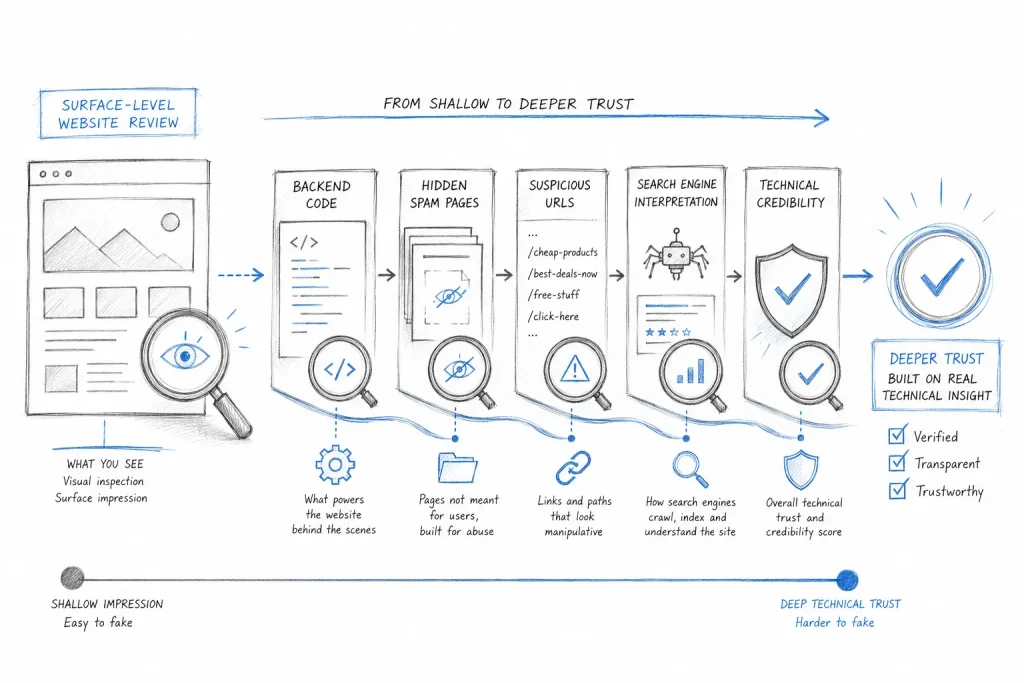
    A proper website review should not only ask:
    “Does the website look okay?”
    It should also ask:
    What do users see?
    What does Google see?
    What is happening inside the backend and code?
    Are there hidden spam pages or suspicious indexed URLs?
    Is the website still trustworthy from a technical and search engine perspective?
    A corporate website is not only a design asset.
    It is part of your company’s digital trust.
    And digital trust is not built only by looking professional on the surface.
    It is built by being clean, secure, credible, and consistent behind the surface too.
    A website that looks normal is not always a website that is healthy.
    Before investing more into SEO, sometimes the smarter question is:
    Is Google seeing the same website that your customers are seeing?

  • Thinking of hiring a web designer for your business

    Thinking of hiring a web designer for your business

    Most businesses choose a web designer based on design style.

    That is the wrong criterion.

    A visually impressive website that loads slowly, breaks on mobile, and cannot be found on Google has failed its core purpose regardless of how it looks on a desktop in a well-lit showroom.

    The skills that actually matter for a business website in Malaysia go well beyond aesthetics:

    • Responsive, mobile-first design (over 60% of local traffic is mobile)
    • SEO-ready page structure from the first build decision
    • UX planning that guides visitors toward an enquiry not just a scroll
    • Basic HTML and CSS knowledge so design decisions don’t break in production
    • CMS experience so you can manage your own content after launch
    • Business understanding the ability to ask the right questions before designing

    The last point is the one most often missing.

    A designer who waits to be told exactly what to do will produce exactly what they are told not what the business actually needs.

    Before hiring, ask one question: “How do you approach a project before you open a design tool?”

    The answer tells you more than any portfolio.